Freeze Out
Outfit for riding warmth
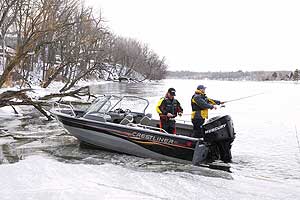
Cold weather watersport apparel has come a long way since the highly restrictive quarter-inch-thick gear that evolved from scuba diving suits. Thanks to latex-sealed drysuits, watercraft touring coats and other specialized gear, getting back on the water this spring comes down to just how soon you'd like to start. Wayne Rungy, owner of Cool Toys in Aurora, Colorado, says, "Riding personal watercraft isn't a matter of how cold it is, but whether or not the lake is frozen". Rungy started the Colorado Extreme Team, a club for watercraft owners who ride year-round. During Denver's annual "Cold Water Classic", a charity personal watercraft event, riders often navigate around ice floats.
While the Extreme Team may be a hard-core example of cold weather enthusiasm, Boogie Norris, vice president/senior sales at Overtons, says that an increasing number of people nationwide are buying cold weather apparel to extend their watersports season. Many garments may look the same, yet prices can vary greatly. Here's a thumbnail sketch of the latest gear, along with some details that will help you make the best buy for your local climate.
Wetsuits
Wetsuits use the body's heat to warm the thin layer of water trapped inside. They should fit tight, like a second skin, to minimize the amount of warm water leaking out and cold water seeping in. Wetsuits sell best in the south where they're used more often than drysuits. "A drysuit is just too hot down here," says Gary Jackson, pro-shop manager at Phil Dill Boats in Lewisville, Texas. A wetsuit's thickness and the method by which it's sewn together dictate the price and level of warmth offered. Brian Constable of Campbell Marine, a watersports dealer in Northfield, New Jersey, stressed the value of tight, durable seams. "You get what you pay for, and people should examine what they buy closely," Constable said.
The highest quality wetsuits ($80 to $200 or more) are 2- to 3-millimeters thick and have soft, latex rubber seals on the edges (similar to those on drysuits, but not as wide) and flat, waterproof seams. Glued, taped and blind-stitched seams are generally regarded as superior. This waterproof, flat-seaming process joins neoprene edges first with adhesive. Then urethane-impregnated tape is laminated over the seams using steam and high-pressure rollers. They're finished with multiple rows of half-moon stitches that arc through the neoprene without piercing the other side. "It's like gluing the edges of two sheets of plywood together, then gluing and stapling another half sheet over the joint for rigidity," says George Harris, production manager for Ski Warm Wetsuits in Lynnwood, Washington.
More economical suits ($70 to $100) are typically two millimeters thick and sewn together using overlock stitching. This process may be strong, but it's not waterproof and it curls the neoprene edges in, creating continuous ridges inside. However, for spring and fall watersports in the mid-Atlantic region, I find these wetsuits quite adequate and can hardly notice the raised rib seams.
Specialty wetsuits designed for high-impact watersports, such as barefoot skiing or wake boarding, may have panels up to 15 millimeters thick for added protection and/or flotation.
Drysuits
Darien Ferguson, a watersports enthusiast from Thornton, Colorado, water-skis from March to October in temperatures as cold as 45 degrees. "We leave work, pull drysuits over our clothes and hit the water," says Ferguson. "If you live in a cold place, having a drysuit is sensible."
According to Bart's Watersports, drysuits are one of the hottest-selling cold weather items around the country. There are two different styles of drysuits: a skin-tight neoprene suit (similar to a high-quality wetsuit), and a baggy suit made of urethane-coated nylon, which allows you to layer clothing underneath. Both types are sealed at the wrists, neck, and ankles with tight-fitting latex rubber. The material is soft, but the large seals can be very imposing for some, especially those who may be a bit claustrophobic or have a 17 inch neck, like me. Price range: $200 to more than $300.
Tom Boddorff, an avid water-skier from Annapolis, Maryland, has owned both styles. "The baggy suit keeps you virtually dry, but the material makes a noisy, squishy sound, and it must be repaired if it springs a leak. Skin-tight, neoprene drysuits are not quite 100 percent dry, but they generally have a longer serviceable life," he explains. "Over time, if a seal fails or a hole develops, the suit will only take in a small amount of water and continue to provide protection like a wetsuit."
Specialized Personal Watercraft Gear
There's a hot new variety of cold-water gear evolving for watercraft riders that delivers splash and wind protection without the wide, tight-fitting rubber seals mandated for immersion suits. Jet Pilot recently introduced a 3/4 length neoprene touring jacket ($125) designed to be worn over a wetsuit while riding PWC.
Splash suits (also called semi-dry suits), available from Ronny and most watercraft manufacturers, are practically as comfortable as wearing a nylon jogging suit. They include a urethane-coated nylon pullover top and pants with waterproof seams and Velcro closures ($180 to $200).
Insulated flotation coats, offered by Yamaha and Kawasaki, feature a unique sealed foam throughout that allows the garment to double as a Coast Guard-approved flotation device ($200 to $240).
Neoprene gloves are essential for devoted cold-weather enthusiasts — popular designs feature pre-bent fingers (price range: $20 to $40). Many PWC riders and kneeboard riders wear rubber-soled, neoprene boots (price range: $40 to $70); water-skiers use skin-tight latex dry socks ($25) that fit into water-ski boots, and for ear protection, neoprene headbands ($20) are all the rage.
The key to selecting an entire outfit is to look for durable stitching in apparel designed for the most extreme temperature you'll be wearing it in. If you're fashion-conscious, soft purple, black, red and teal combinations are hot — neon is not. So, get suited up and we'll see you on the water.
Sources
Bart's Watersports
7581 E. 800 N.
North Webster, IN 46555
(800) 348-5016
Jet Pilot
Vista, CA
(760) 734-1111
Ski Warm Wetsuits
4173 Wheaton Way
Bremerton, WA 98310
(360) 373-9080
Ronny America Inc.
240 Portage Road
Lewiston, NY 14092
(905) 468-4282
Overtons
111 Red Banks Road
Greenville, NC 27835
(800) 334-6541